William Board
M A N A G E M E N T & L A W
P L A N I N G I S S U E S
The Primary Agency responsible for urban governance and planning in Mumbai is the Municipal Corporation of Greater Mumbai (MCGM). Its jurisdiction covers an area of 233 sq. miles and a population in the range between 16 and 22 million residents, depending on different statistics. The island is then split into two zones, to the north is the Mumbai Suburban District and the south is known as Mumbai City, where the project is situated. There are several areas that are not under direct jurisdiction of the MCGM including land owned by, defence, Mumbai Port Trust, Atomic Energy Commission and the National Park.
The site is situated within Ward A, Colaba, it is one of the original seven islands that made Mumbai and has a varied mix of zoning and planning irregularities. The Kolis population have a right of access to water (in this case the sea), that was established by colonial powers and consequently enshrined into the Indian Constitution. This has enabled the population to continue its presence in Colaba, however being moved to the periphery adjacent to water as subsequent development of colonial mansions and 70’s high rise development has encroached and spread out. The high rise development overlooks the slum like conditions of the Kolis villages, but is also some of the most expensive real estate in the world. High rise development is currently spreading above the colonial buildings that are often neglected and derelict due to ownership irregularities.
Mumbai has a planning policy that restricts the height of buildings to ten storeys near designated bays. This however is often negated in suspicious circumstances as there is not a defined definition of what makes an area a bay. The current development plan allowing for higher floor space index in the 2034 plan now allow for a high density design in areas that have good public transportation, but does not take into account amenities such as water supply, waste management and drainage into account.
D E V E L O P M E N T A P P R A I S A L
Sassoon Docks, the main fishing port in Mumbai, and site of the main proposal of the project is owned by the statutory body, Mumbai Port Trust (MPT). The MPT currently own considerable stretches of the land along the eastern sea board of Mumbai, there is growing pressure from the city the MCGM and other bodies for the land to be freed up for redevelopment and much of it is either un-used or underutilised. The city is growing at a rapid rate and amenities are needed to support existing and new systems.
The MPT have stated that Sassoon Docks is to be regenerated and upgraded to meet European standards of health and safety, due to a large quantity of the whole sale fish brought in at the docks is then exported out to the European Market. Current practices within the docks do not meet standards due to the archaic infrastructure and lack of regulation enacted at the dock currently. On visiting the docks I noticed several key components of the industry do not take place there including: ship maintenance, ice production, water treatments and other facilities these have informed the design brief and programme for the design. The MPT has concurrently come with its own brief for the redevelopment of the docks, with the same infrastructures requirements with the inclusion of restaurants and further accommodation.
The MPT proposal has a current estimated cost at Rs 25.5 Crore, around £2.5 million, however no detail plan for the moving and creation of the new facilities has been set out, and this figure could ultimately change when fully resolved plans are developed.
To achieve my proposed design, involving a number of large buildings requiring specialist installation would exceed the perceived costs of the MPT proposal, a larger funding body would need to be formed, a joint venture between the MPT, MCGM, Indian Government and possibly private investors could be enacted. A co-operative of the existing 150,000 Kolis population that currently work within the docks could be formed enabling the organisation to possibly fund part of the design.
P R O C U R M E N T & R I S K
The Procurement method for the envisaged design would be a Two-staged Tendering Design & Build (D&B) contract where the design team and the contractors are employed separately. The Design team will be brought on board first to help produce the overall master plan and desired design layout for the project. A tendering process for Contractors and specialist engineers for the creation of ice production units and desalination plants will be employed for a pre-construction services agreement, enabling an efficient and functional design of the specialist zones. After a detailed design has been developed by the Architect and the Contractors a second stage tendering bid will enable the contractor to calculate a realistic price for the proposed design.
A Project Manager may be employed to help co-ordinate the complexity of the various people employed in the design which may include; architects, contractors, subcontractors (e.g. concrete specialists, reinforcement, formwork), engineers, specialist engineers (ice, desalination), quantity surveyor, India’s equivalent of a CDM Coordinator and legal representation.
The two staged tendering process transfers the risk of the project to the contractor, the client in this situation losses leverage in the design due to the contractor becoming embedded within the team. As the contractor is embedded within the team this creates less of a threat from competition during the second tendering bid.
Risks that may be encountered in the building of the concrete have been mitigated as shown in the third technology submission which focused on the construction of the concrete, by looking at the workmanship of existing concrete structures in Mumbai, generally being of poor conditions and poor health and safety records. This has led to the adoption of a textured concrete appearance by the use of recycled boat parts and building to create the formwork. Risk of injury to personal working on the project may be higher than in the UK due to poor health and safety records in Indian construction industry.
A R C H I T E C T U R A L P R A C T I C E
In India they do not have their own specific Plan of Work, the adoption of the current RIBA 2013 Plan of Work for the project would allow for the integration of the team members early on and help understand the details and tasks required from each member at the eight stages. The new plan allows for the integration of the two staged tendering contract to be full utilised in the production of the project specific plan of work covering the design build up to and including hand over.
To achieve the proposed plan I, as the principal design consultant, along with the contractor and client would come up with the initial designs with consultation with the specialist engineers for the ice production and water desalination plants to achieve a realistic and achievable design that can subsequently be tendered by the contractor. My role may also be crucial in the project management of the proposal due to the design allowing spaces to be altered and defined by the occupants of the building daily. Without this input from myself, as the principal designer and a voice for the Kolis population the project may be altered into a purely functional piece of architecture.
Professional indemnity insurance will be needed to cover the architectural practice against court action in the unlikely circumstance that something goes wrong.
P R O F E S S I O N A L R E F L E C T I O N
Upon Completion of the Masters of Architecture Course, I intended to take a month’s break before actively searching for a job in an Architects Practice either here in the UK or abroad. Having been influenced by the design studios ethos of exploration of commons and my own study of the Kinetic City, I want to find a practice that engages with the end functionality of the design, and looks beyond the perceived notion of the function of space.
There are many opportunities to work abroad and one option is to return to India and find employment in architectural practices either in Mumbai or another Indian City. I enjoy the buzz that can be found in these cities and want to learn more about different attitudes to design in different cultures.
Another opportunity to work abroad may be either in New Zealand or Australia, having travelled to the countries before commencement of the Masters course. I am inclined to return as they are visually stunning countries which offer different opportunities and an active outdoor lifestyle. Hopefully I can find an architecture positions within either country that will lead me to move there for a year, possibly working in both countries on consecutive years. Within these countries I want to find a small to medium architectural practice that produces a wide range of projects that socially engages in the aspects of the function of their final design.
If I am not successful in finding work abroad I will actively seek employment in a London based practice. Having worked in London both centrally and out in zone four, I enjoyed the benefits of living in the capital and all that is has to offer. Either after returning from abroad or working in London I want to have passed my part three examinations in a maximum of four years’ time. After this I want to gain further experience in the architectural profession by working in practice.
Eventually I would like to open my own architects practice with a couple of friends. There is also the possibility of eventually going in to tutoring and giving some knowledge that I have hoped to gain over the years back to the next generation of Architects.

Cuffe Parade - located in Colaba this area consist of a series of 1970's high rise residential blocks that are some the most expensive real estate in the world.

Adjacent to Cuffe Parade is the Kolis fishing village of Machhimar Nagar. They live in slum like conditions even though their tenements have a right to be there.
Cuffe Parade - located in Colaba this area consist of a series of 1970's high rise residential blocks that are some the most expensive real estate in the world.


The fish is a delicacy in Mumbai.

The red line indicates land owned by the Mumbai Port Trust who own Sassoon Dock.
The red line indicates land owned by the Mumbai Port Trust who own Sassoon Dock.
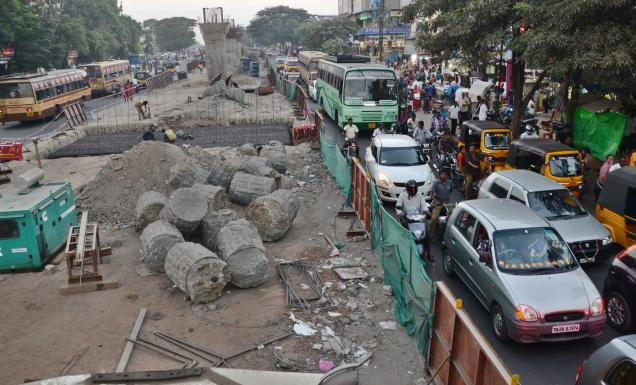
Poor site boundaries

Carrying of Heavy Loads

Work on large infrastructures.
Poor site boundaries